 Daniel Thompson
July 22, 2026
Daniel Thompson
July 22, 2026
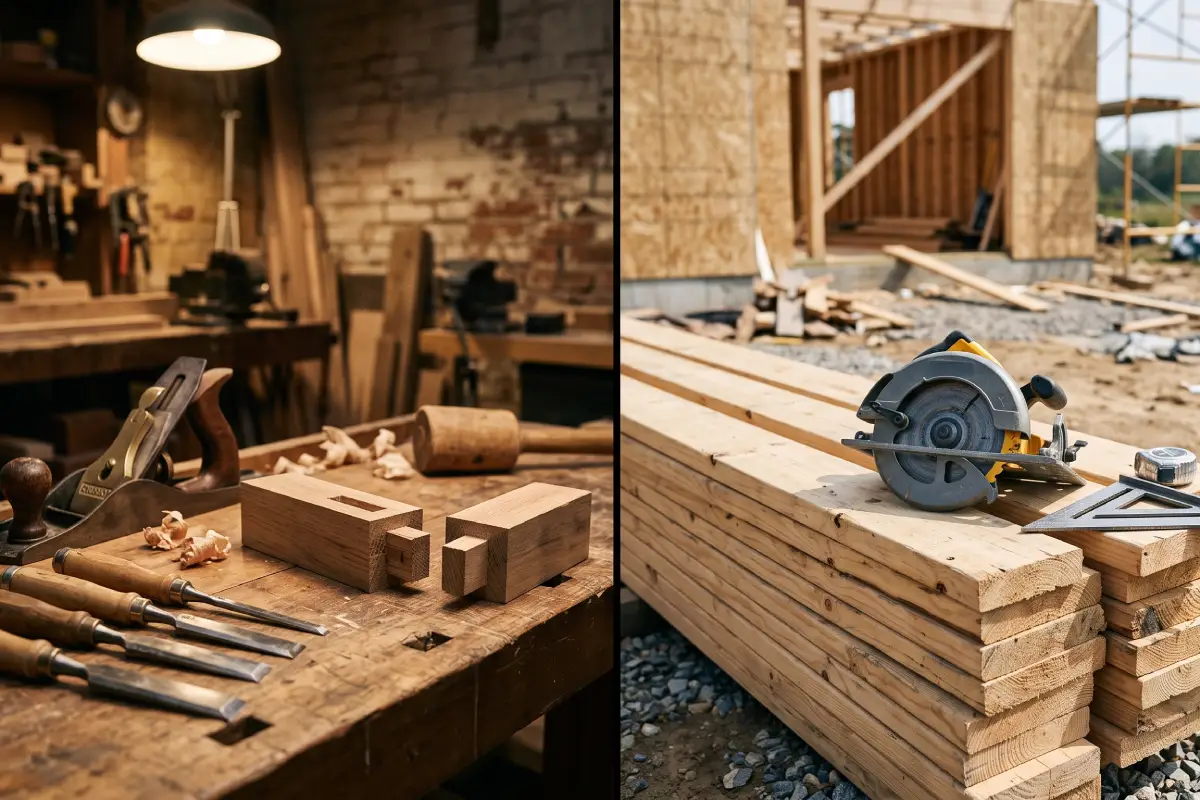
Quick answer: Joiners fabricate timber components (doors, stairs, cabinetry) off-site in a workshop. Carpenters build structures and install those components on the building site. The difference is where the work happens and at what stage, not which trade is more skilled.
Table of contents
- Workshop versus worksite: the split that holds up
- What a joiner actually makes
- What a carpenter actually builds
- Where the two trades overlap
- Carpentry vs joinery at a glance
- Why the two trades get mixed up
- Which one should you hire?
- The bottom line
In Australia, carpenters and joiners answer to the same official occupation classification, ANZSCO code 331211, yet the two rarely share a workspace.
Most people use the words interchangeably. Part of the reason is that American sources barely mention joiners at all, so anyone reading across regions ends up with a muddle.
That muddle costs money on a renovation. Hire a carpenter for bespoke cabinetry, or a joiner to frame a roof, and you waste everyone’s time.
The quickest way to tell them apart comes down to two things: where the work happens and at what stage. Joiners fabricate timber components in a workshop. Carpenters build structures and install those components on-site.
Key takeaways
- Joinery is workshop work; carpentry is on-site work.
- Joiners make components; carpenters build structure and install.
- In Australia both trades share a classification and much of their training.
- Bespoke pieces cost more and take longer, because they are built to order.
- A full renovation usually needs both trades.
Workshop versus worksite: the split that holds up
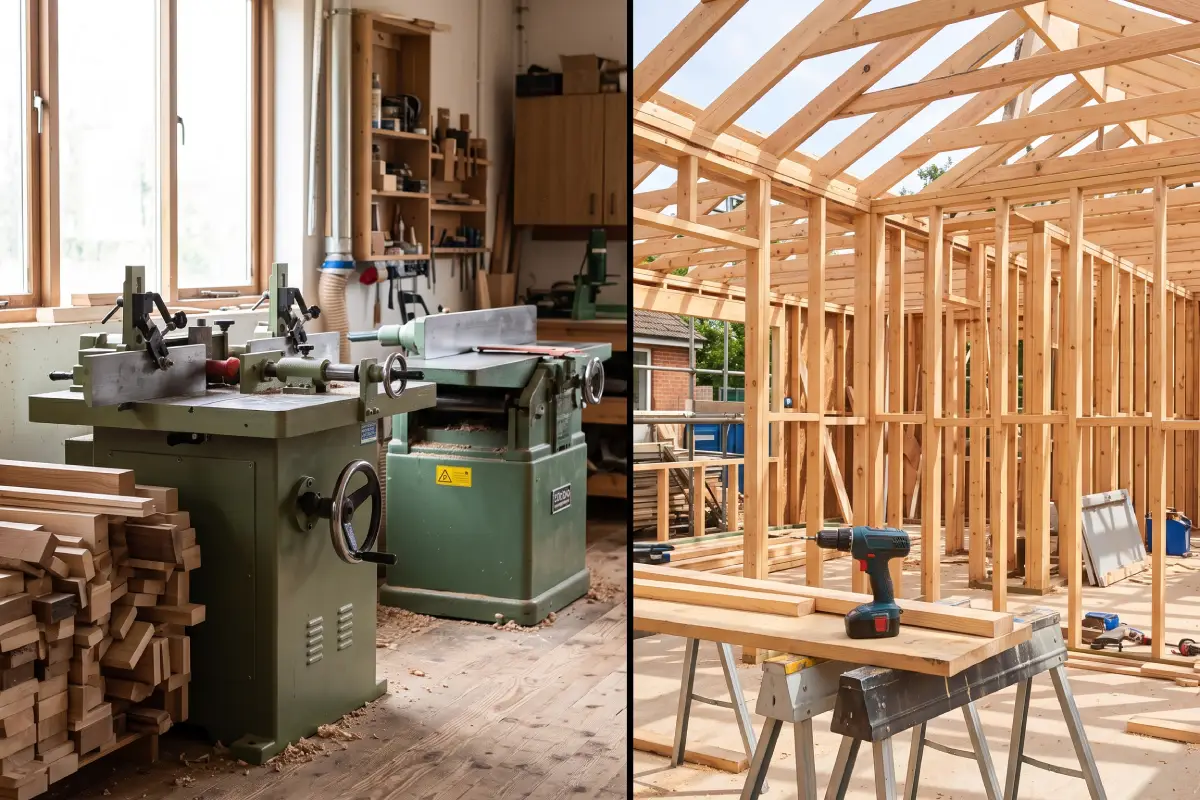
The cleanest test is location: a joiner works off-site, a carpenter works on it.
That single fact drives almost every other difference. A workshop gives a joiner climate control, fixed benches, and heavy stationary machines like thicknessers, spindle moulders, and panel saws.
Those conditions let a joiner cut to tolerances of a millimetre or less. You cannot hold that precision on a windy, dusty site.
A carpenter trades some of that precision for scale and adaptability. On-site work means fitting timber to a structure that is never perfectly square, and scribing each piece to match the walls as they actually sit.
What a joiner actually makes
A joiner produces finished timber components, built to order.
Where the name comes from
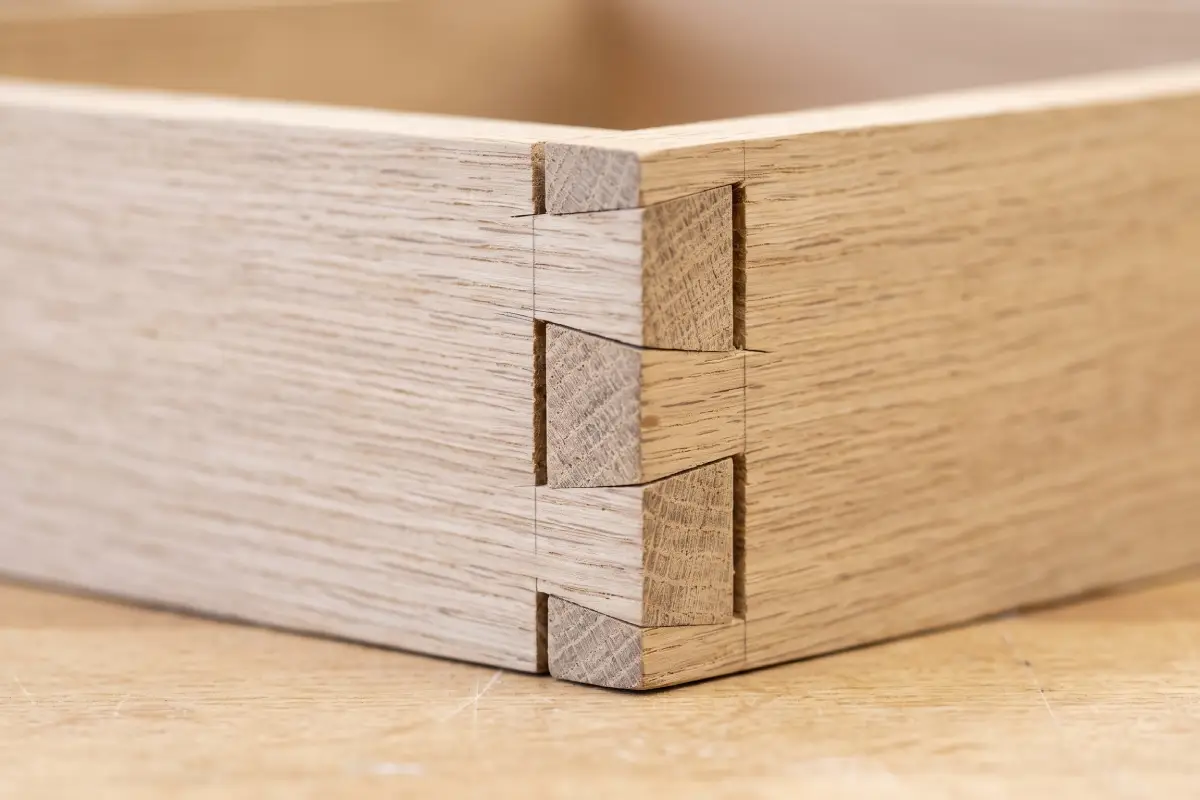
The trade takes its name from the act of joining pieces of timber together. Traditional joinery relies on cut joints such as mortise and tenon or dovetails rather than nails or brackets.
What joinery covers
A joiner produces internal doors, window frames, staircases, cabinetry, built-in wardrobes, benchtops, and bespoke furniture.
Nearly all of this work is made to order. The joiner builds the piece in the workshop, then it travels to the site for someone to install.
What a carpenter actually builds
A carpenter handles structure and installation, usually in two stages.
First-fix carpentry
First-fix work happens before the walls get lined: framing walls, laying floor joists, and erecting roof trusses. This is the skeleton of the build.
This stage carries the highest risk on any build, which is why construction site safety planning is built around the fall and equipment hazards that first fix introduces.
Second-fix carpentry
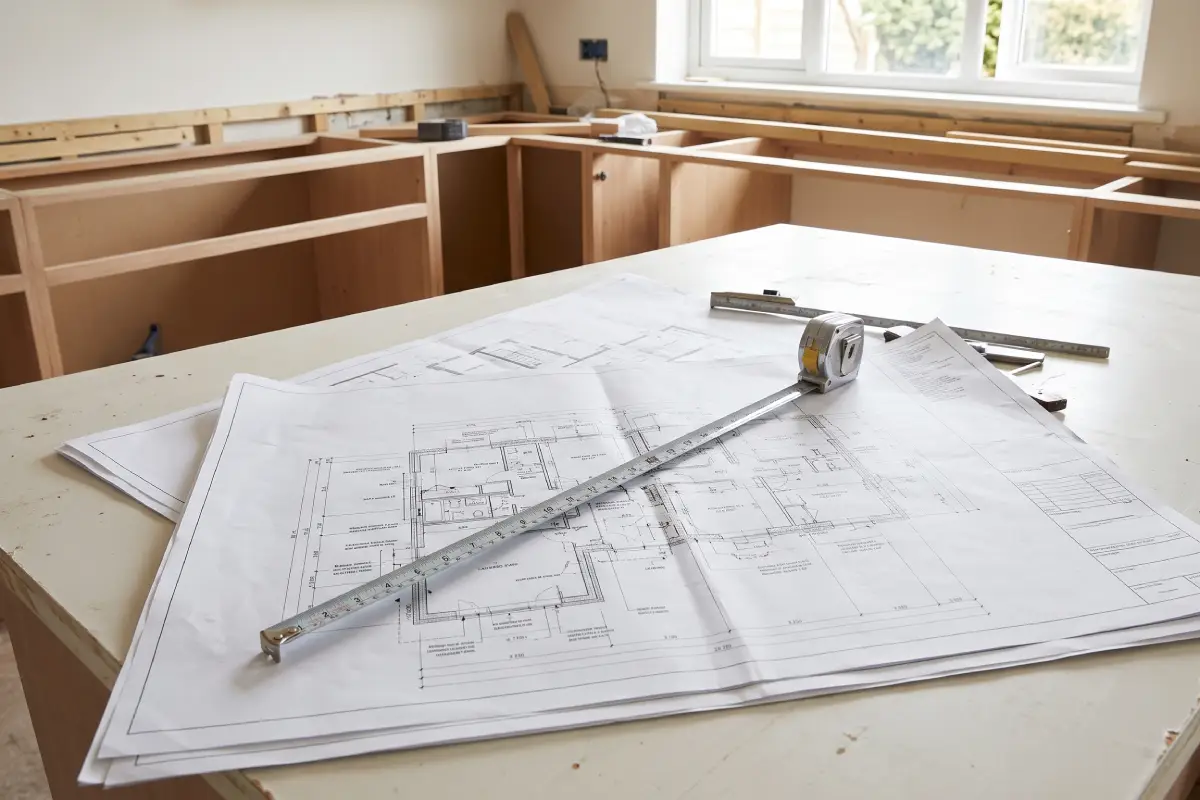
Second-fix work happens after the plaster goes up: hanging doors, fitting skirting boards and architraves, and installing the components a joiner has made.
A carpenter reads the building as it stands and adjusts on the spot. Walls drift out of level, and part of the skill is making standard timber sit flush against surfaces that are not.
Where the two trades overlap
In Australia the two trades share a classification and much of their training.
They sit under the same ANZSCO grouping, and the Certificate III pathways run side by side, with the Certificate III in Joinery (CPC31920), listed on Australia’s national register for training, sharing core units with carpentry training.
Plenty of tradies qualify in both and practise both. The dual skill set is common enough that one person may genuinely handle either side well.
On a single job the roles interlock. A joiner builds the staircase in the workshop, then a carpenter fits and secures it on-site.
So the line blurs in daily practice even though the definitions stay clean.
Carpentry vs joinery at a glance
| Feature | Joinery | Carpentry |
| Where the work happens | Workshop, off-site | On the building site |
| Stage of the build | Fabrication, before install | Construction and installation |
| Typical output | Doors, windows, stairs, cabinetry, furniture | Framing, roofing, flooring, fit-off |
| Core skill | Precision joints, fine finishing | Structural work, fitting to real conditions |
| Tools | Stationary workshop machinery | Portable power tools, hand tools |
| Precision demand | Sub-millimetre tolerances | Adapts timber to imperfect structures |
| Typical cost driver | Custom, made-to-measure work | Labour, scale, materials |
| Lead time | Longer, built to order | Shorter, done in place |
Why the two trades get mixed up
Most of the confusion comes down to regional language.
In the UK and Australia, the split between carpenter and joiner is standard vocabulary. In North America, the word “joiner” is rare.
Carpenters there absorb most of what Australians would call joinery, and terms like “finish carpenter” or “cabinetmaker” cover the fine work.
History explains the rest. As machinery moved detailed woodwork into fixed workshops, the workshop trade separated from the site trade, and the two names stuck.
Which one should you hire?
Match the trade to the stage of your project.
Hire a joiner when
You need bespoke cabinetry, a new staircase, made-to-measure wardrobes, or quality internal doors. Expect a lead time and a higher unit cost, because custom workshop work carries both.
Hire a carpenter when
You need decking, framing, structural repairs, or doors and trim fitted off.
When you need both
A full renovation usually needs both trades, often coordinated by your builder. Ask any tradie which side they specialise in, since the dual qualification means one person may lean heavily toward one trade despite holding tickets in both.
This matters most on heritage homes, where original timber profiles and joints have to be matched rather than replaced with off-the-shelf stock. Heritage Restorations and Renovations in Sydney is one example of an outfit that coordinates both trades on that kind of project, pairing joinery-matched period detailing with the structural carpentry a heritage property needs.
 The bottom line
The difference between carpentry and joinery holds up cleanly on two axes: where the work happens and at what stage. Joiners fabricate timber components in a workshop. Carpenters build and install on-site.
In Australia, the two trades share a classification, share much of their training, and constantly work together, so the same person or team often covers both.
That means the honest question is not which trade is better. It is which stage of your project needs which skill, and most renovations need both.